
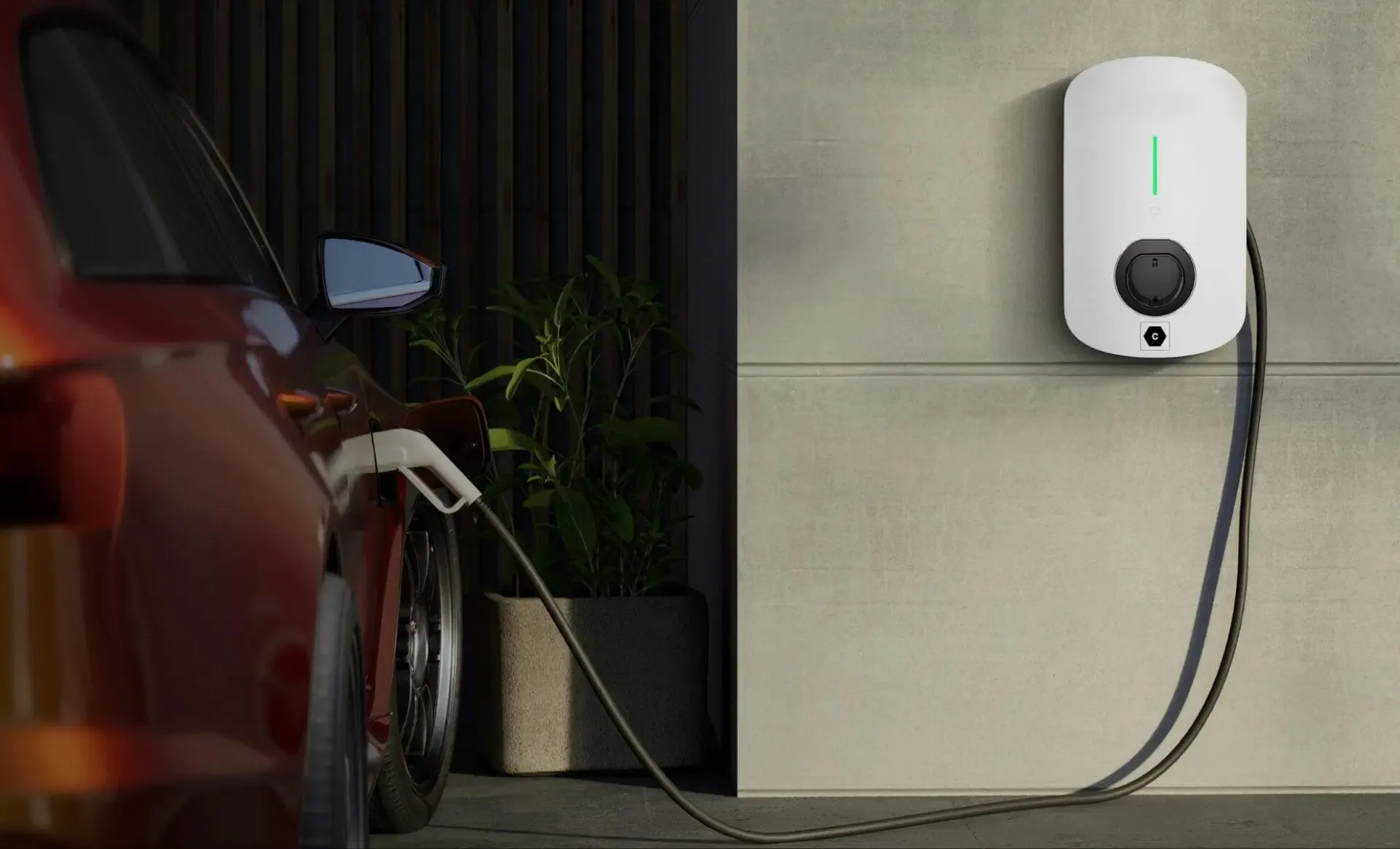
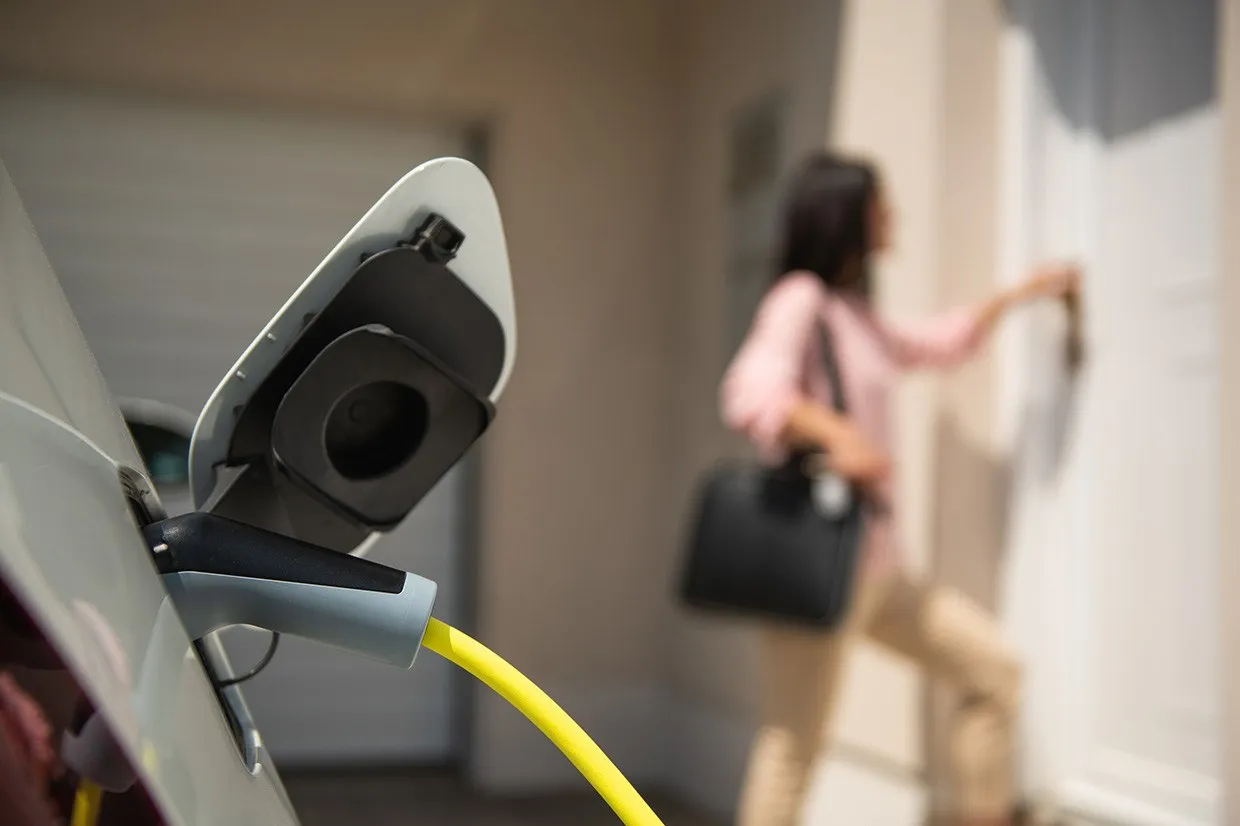
AC wallbox for homes & societies
- Power: 3.3 / 7.4 kW (single-phase) · 11 / 22 kW (three-phase)
- Connector: Type 2 (IEC 62196) · Bharat AC-001 / LEV for 2- & 3-wheelers
- Best for: Bungalows, apartment parking, offices, hotels
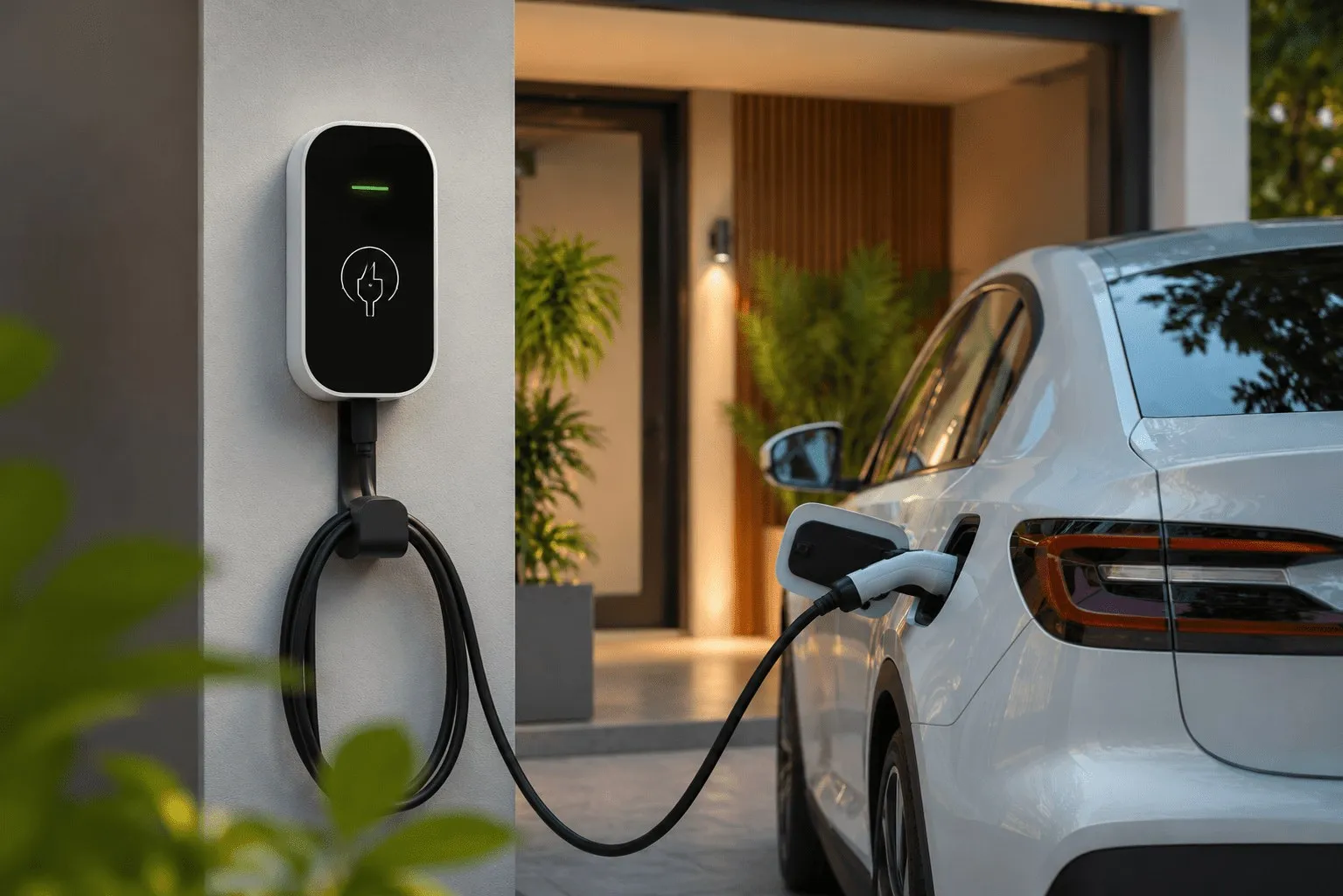
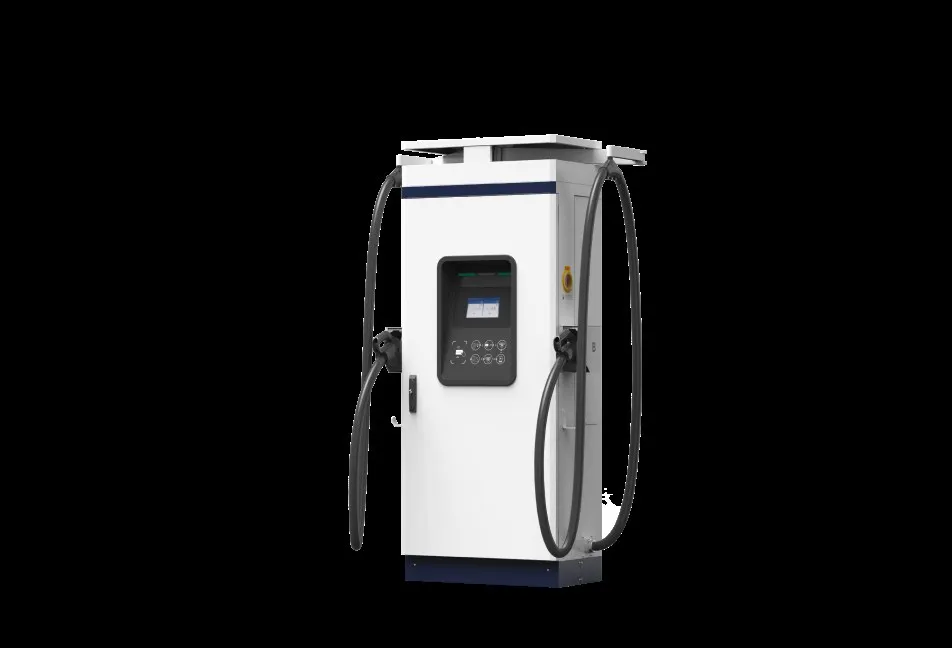
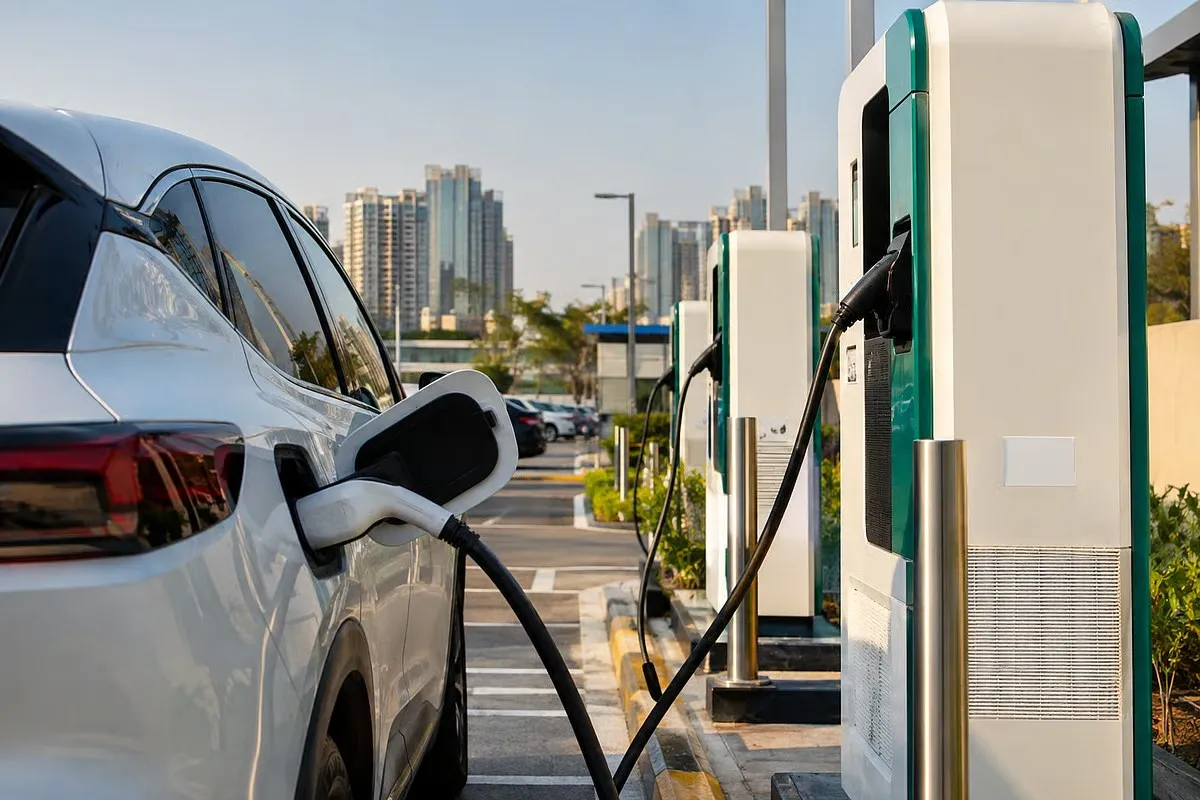
From a 7.4 kW wallbox in your parking to 240 kW DC fast chargers for fuel stations and fleets. We survey, get the DISCOM approval, install and maintain.
Cars, two- and three-wheelers, cabs, delivery fleets and e-buses.
Swipe for more →
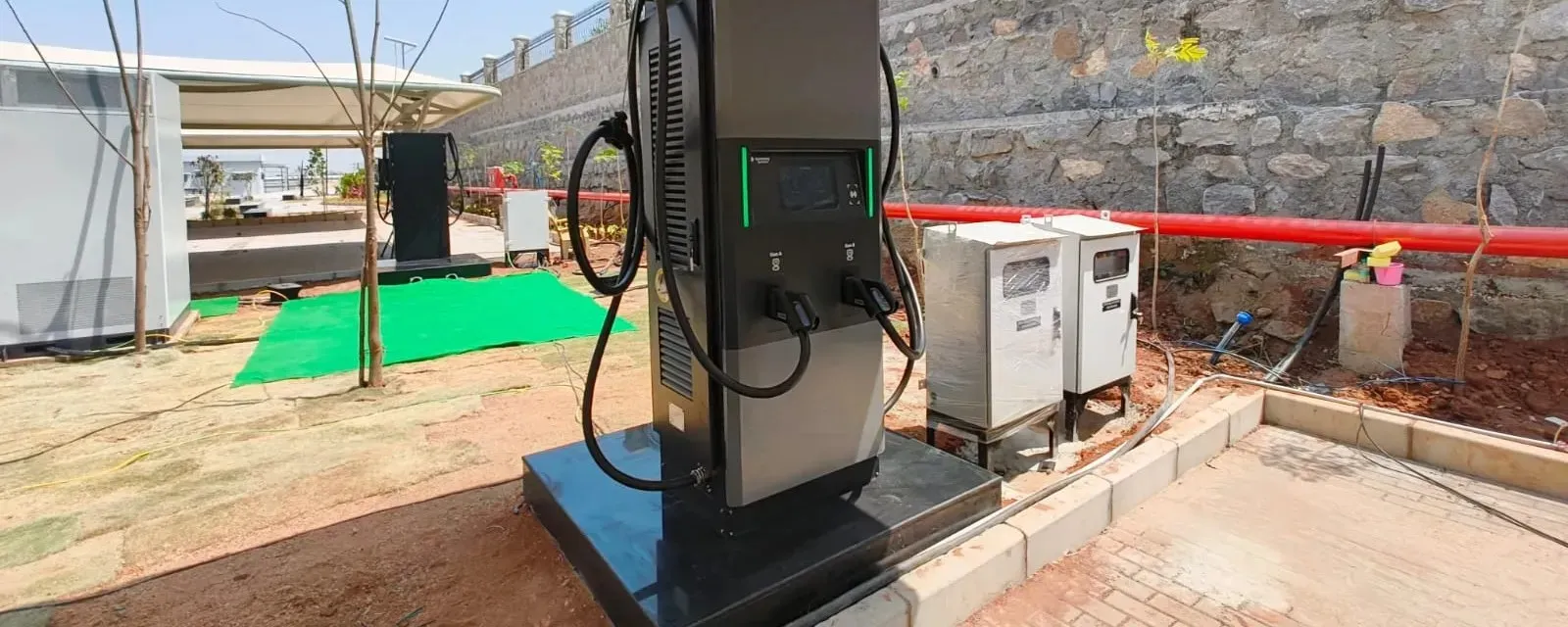
| Power range | 3.3 kW to 800 kW |
|---|---|
| Connectors | Type 2 AC, CCS2 DC (Indian standard for cars), GB/T & CHAdeMO optional, Bharat AC-001 for 2W/3W |
| Input supply | Single-phase 230 V AC (home) · three-phase 415 V AC (commercial) |
| Protection | IP55 enclosures for outdoor DC chargers; over/under-voltage, earth-fault, surge & over-temperature protection |
| Smart features | OCPP 1.6J / 2.0.1 back-end, RFID & app control, load management, dynamic power sharing, remote diagnostics |
| Noise | Below 60 dB on fast DC chargers |
| Solar + storage | Pairs with rooftop solar and BESS to charge on sunshine and cut peak demand |
Swipe for more →
₹18,000/kW for common-area solar, plus up to 100% support for public EV chargers.
Societies get ₹18,000/kW for common-area solar (up to 500 kW). Under PM E-DRIVE, residential colonies, hospitals and colleges that open chargers to the public can get up to 100% of charger and wiring costs.
Up to 100% of charger and wiring costs for public charging sites, till March 2028.
PM E-DRIVE funds 72,300 public chargers. Government offices, residential colonies, hospitals and colleges get up to 100%; fuel stations, bus and railway stations and toll plazas get 80% of wiring/transformer costs and 70% of charger cost; malls, markets and highway amenities get 80% of wiring costs.
Charging-station power is capped at the average cost of supply: 0.7× in solar hours.
EV charging connections get a single-part tariff capped at the average cost of supply till March 2028: 0.7× during solar hours (9 am – 4 pm) and 1.3× at other times. Add solar and a battery to charge at the lowest cost.
State capital support for public DC fast chargers, with charging every 25 km on highways.
The ₹1,993 crore Maharashtra EV Policy 2025–30 gives capital support for public DC fast chargers and plans charging every 25 km on major highways, at fuel stations and bus depots.
Checked 1 Oct 2026. Rules change often, so we confirm the latest before every quotation. Free advice on what applies to you →
Most cars charge comfortably overnight on a 7.4 kW single-phase AC wallbox (Type 2). With three-phase supply, 11 or 22 kW chargers are faster. Two- and three-wheelers use 3.3 kW (Bharat AC-001 / LEV) chargers.
For homes, a charger usually runs on your existing connection after a load check. For public and commercial charging, a separate EV connection with an EV tariff is recommended. We prepare and file the application.
CCS2 is the standard fast-charging connector for cars in India. Our DC chargers support CCS2, with GB/T and CHAdeMO as options.
Yes. Under PM E-DRIVE (till March 2028), government offices, residential colonies, hospitals and colleges that open chargers to the public can get up to 100% of the cost, and fuel stations, bus and railway stations and toll plazas get 80% of wiring and 70% of charger cost.
A 60 kW charger typically adds about 100–150 km of range in 20–30 minutes. 120–240 kW chargers are faster, depending on the car’s maximum charging rate.
Share your name and mobile. We call you back, study your bill and site, and send a clear quotation.
Or call +91 9370289988 · WhatsApp